

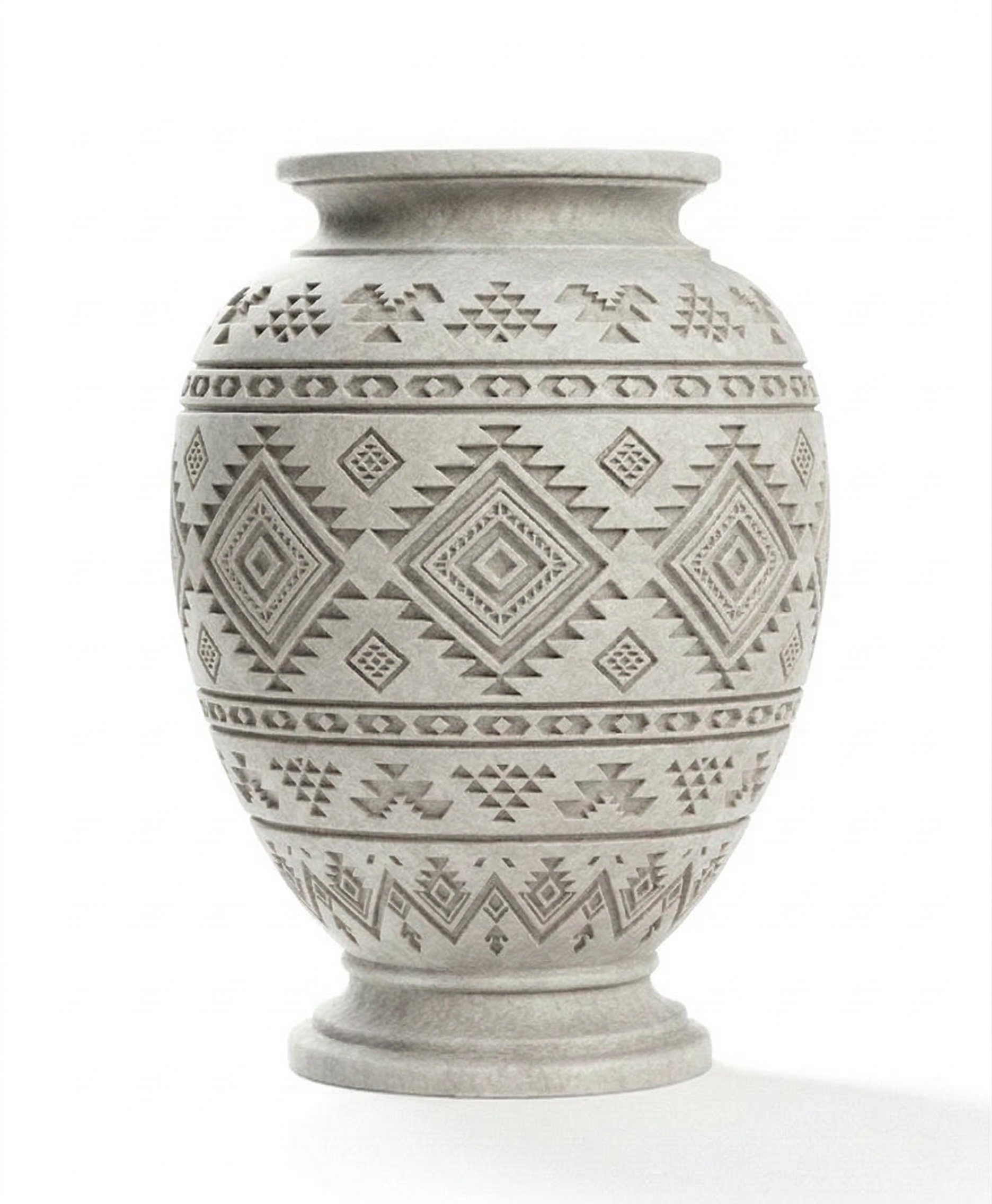
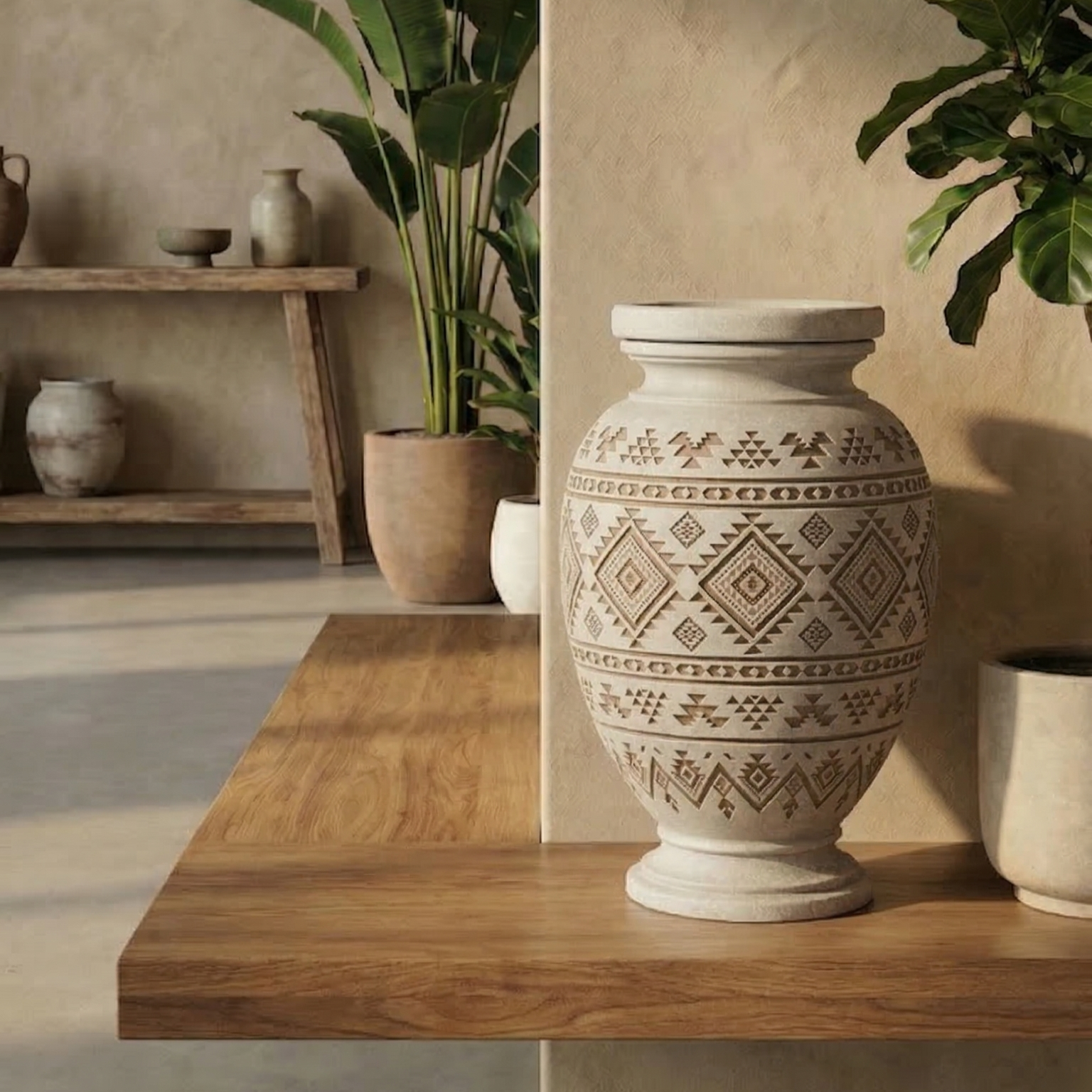
Derived from the Greek word for "pomegranate," the baluster form evolved from ancient vessels to Renaissance architecture. This classic silhouette, defined by a swelling body and tapered base, was popularized by masters like Michelangelo. Today, it remains a symbol of permanence and grace, often merging classical European structure with diverse artistic traditions to create timeless, dignified memorials.
Derived from the Greek word for "pomegranate," the baluster form evolved from ancient vessels to Renaissance architecture. This classic silhouette, defined by a swelling body and tapered base, was popularized by masters like Michelangelo. Today, it remains a symbol of permanence and grace, often merging classical European structure with diverse artistic traditions to create timeless, dignified memorials.